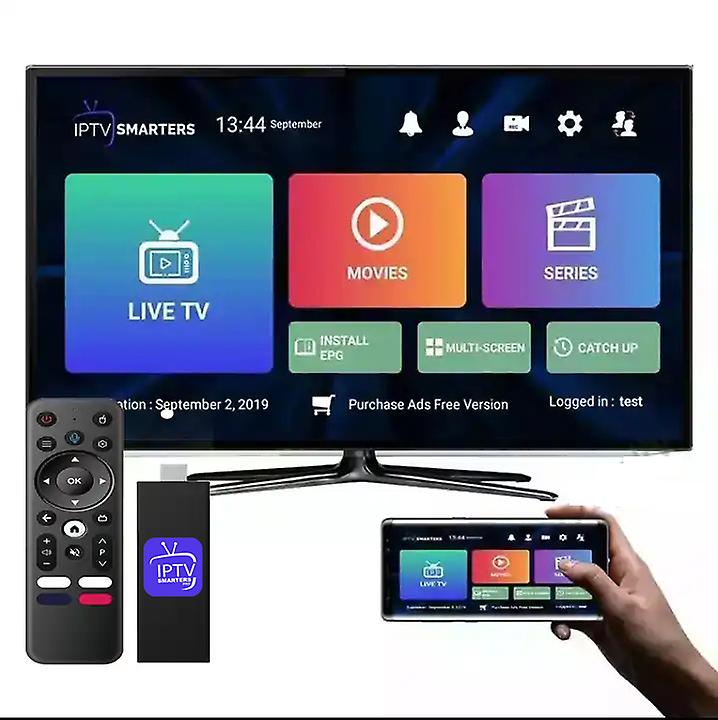
The way people watch television in the UK has changed dramatically. Viewers are no longer tied to fixed schedules, traditional television packages, or a single screen in the living room. Instead, modern audiences expect flexibility, convenience, choice, quality, and control over their entertainment.
This shift has helped IPTV UK become an increasingly important part of the modern television conversation. Internet Protocol Television, commonly known as IPTV, delivers television content through an internet connection rather than relying exclusively on traditional broadcast, satellite, or cable infrastructure.
For today's viewer, television is becoming less about where content comes from and more about how easily it can be accessed. An IPTV UK subscription can fit naturally into this changing behaviour by supporting internet-based viewing across compatible devices and allowing audiences to approach entertainment in a more flexible way.
The modern television audience has different expectations from previous generations. Traditional television often required viewers to organise their schedules around programmes. Today, viewers increasingly expect television to work around them.
People watch content during different parts of the day and across different devices. A television in the living room may still be important, but smartphones, tablets, computers, smart TVs, and streaming devices have created a much more connected viewing environment.
This changing behaviour has produced a new type of television fan: the on-demand, device-flexible, choice-focused viewer.
Rather than simply asking whether a television provider offers enough channels, viewers are more likely to consider questions such as:
These expectations explain why IPTV UK services continue to attract attention from people interested in modern alternatives to conventional television.
IPTV UK refers to television services delivered using internet protocol technology. Instead of receiving television programming through a conventional terrestrial, satellite, or cable signal, IPTV can deliver content through an internet connection.
The basic concept is straightforward. When a viewer selects a programme or live channel, the service sends the relevant digital stream through the internet to a compatible application or device.
This technology creates opportunities for a more flexible viewing environment.
However, IPTV is not automatically synonymous with unlimited or unrestricted access to every television programme. The legality and licensing of content depend on the provider and the rights it has to distribute that programming. Viewers should therefore choose legitimate services and check what content is properly licensed.
One of the strongest characteristics of the modern viewer is a desire for flexibility.
Traditional television was designed around schedules. A programme started at a particular time, appeared on a particular channel, and viewers were expected to be available.
Modern internet-based entertainment has changed that relationship.
Viewers increasingly want to decide when, where, and how they consume entertainment. This does not necessarily mean that live television has become irrelevant. Live sports, news, events, and scheduled programming remain important.
Instead, today's audience wants both live and flexible viewing options.
An IPTV UK subscription can potentially support this model when the service provides legitimate live television alongside appropriate on-demand features.
The television is no longer the only screen that matters.
A modern household may have several connected devices, including:
This has changed what viewers expect from a television service.
Instead of purchasing a service specifically for one television set, people increasingly look for solutions that integrate with the technology they already use.
Device compatibility should therefore be one of the first considerations when comparing an IPTV UK subscription. A service may offer impressive features, but those features have limited value if the platform does not work properly with the viewer's preferred equipment.
Cost remains an important consideration for UK households.
Traditional television packages can include numerous channels that an individual household rarely watches. Modern viewers are increasingly interested in understanding exactly what they are paying for and whether a service fits their actual viewing habits.
This has made the IPTV UK subscription an interesting option for consumers researching internet-based television.
However, price should never be the only deciding factor.
A very cheap service is not necessarily good value if it suffers from poor reliability, limited support, unclear licensing, or inconsistent streaming quality. A better approach is to consider the complete package.
Important factors include:
Content selection: Does the service offer the type of programming the household wants?
Streaming reliability: Can content be watched consistently without frequent interruptions?
Video quality: Does the service support an appropriate level of picture quality for the viewer's equipment and internet connection?
Device compatibility: Can the service work with the devices already available?
Customer support: Is assistance available when technical problems occur?
Transparency: Does the provider clearly explain its service, pricing, terms, and content rights?
A balanced assessment provides a much better indication of value than looking at the subscription price alone.
Modern viewers have become accustomed to high-quality digital entertainment.
Large televisions and high-resolution displays make poor-quality streams particularly noticeable. For this reason, streaming quality has become a major part of the modern viewing experience.
Several factors can influence performance. These include the provider's infrastructure, the quality of the stream, network congestion, device capability, and the viewer's own internet connection.
Even the best IPTV service cannot completely overcome an unstable home connection.
Viewers should therefore consider their broadband performance as part of the overall setup. A stable internet connection can make a significant difference when watching high-quality video.
The modern viewer increasingly wants control.
Instead of accepting a predetermined entertainment experience, audiences want to select programmes based on their interests. They may watch a live event in the afternoon, a film later in the evening, and an on-demand series at the weekend.
This is where internet-based television fits naturally into changing viewing habits.
IPTV UK reflects this movement towards personalisation and choice. The technology itself does not dictate how someone must watch television. Instead, it can provide an internet-based platform through which different forms of content can be accessed.
The result is a viewing experience that can feel more aligned with modern digital habits.
The discussion around IPTV is sometimes presented as a simple battle between old and new television. In reality, the transition is more gradual.
Traditional television remains relevant to millions of UK households. Terrestrial broadcasting, satellite services, cable television, and streaming platforms all continue to have their own audiences.
IPTV does not necessarily need to completely replace these technologies to be useful.
For some viewers, an IPTV UK service may represent another way to access legitimate television content. For others, it may form a larger part of their entertainment setup.
The key change is that viewers now have more ways to consume television than ever before.
Choosing an IPTV UK subscription requires more than searching for the provider with the biggest advertised channel count.
A sensible evaluation should begin with reliability and legitimacy.
A trustworthy provider should clearly communicate what it offers, how the service works, what devices are supported, and what customers can expect from the subscription.
Viewers should also be cautious about services making unrealistic claims. Extremely large channel numbers, suspiciously low prices, unclear company information, and vague licensing details can all justify additional research.
A good subscription should provide clarity rather than confusion.
Before subscribing, viewers should investigate:
These considerations help separate a genuinely useful service from an unreliable provider.
Younger generations have grown up surrounded by internet-connected technology. For them, accessing entertainment through an app, website, or connected device is completely normal.
They are accustomed to searching for content, switching between platforms, watching different types of media, and using multiple screens.
Consequently, television is no longer viewed exclusively as a passive experience.
It has become part of a broader digital entertainment ecosystem.
IPTV fits into this ecosystem because it uses internet technology to deliver television programming. The concept is consistent with a broader transformation in how people consume digital content.
The future of television is unlikely to be defined by one technology alone.
Instead, the UK entertainment market will probably continue moving towards a mixture of live broadcasting, streaming platforms, on-demand services, connected devices, and internet-delivered television.
As broadband infrastructure improves and smart devices become increasingly common, internet-based viewing can become even more integrated into everyday entertainment.
For IPTV UK, this creates both opportunities and challenges.
Providers will need to focus on reliability, legitimate content distribution, usability, customer experience, security, and technological compatibility. Viewers, meanwhile, will become increasingly selective.
Simply offering a large catalogue may no longer be enough. Modern audiences will expect services to be dependable, transparent, easy to use, and compatible with their digital lifestyles.
The growth of IPTV UK is not simply about technology. It reflects a much broader change in viewer expectations.
Today's television audience wants freedom, convenience, choice, accessibility, and control.
People want entertainment that fits around their lives rather than requiring their lives to fit around a television schedule.
An IPTV UK subscription can be part of that transformation when it comes from a legitimate provider and delivers content through a reliable, transparent service.
The biggest change is therefore not necessarily the disappearance of traditional television. It is the emergence of a viewer who expects television to be more flexible, connected, and personalised than ever before.
The modern UK television viewer is changing, and the industry is changing alongside them.
IPTV UK represents one part of the wider movement towards internet-based entertainment, giving viewers another way to think about live television, digital content, and connected viewing.
For anyone considering an IPTV UK subscription, the smartest approach is to look beyond impressive channel numbers or low prices. Reliability, content legitimacy, device compatibility, streaming quality, customer support, and transparent subscription terms matter far more in creating a dependable viewing experience.
As audiences continue to embrace connected technology, the future of television will increasingly belong to services that understand what modern viewers actually want: better choice, greater flexibility, and entertainment that fits naturally into everyday life.

This post has been authored and published by one of our premium contributors, who are experts in their fields. They bring high-quality, well-researched content that adds significant value to our platform.










Home Guide provides trusted home improvement tips, DIY ideas, maintenance guides, and interior design inspiration to help you create a smarter, safer, and more beautiful home.